
How to Prepare Your Horse for Their First PEMF Session
A practical guide to getting your horse ready for PEMF therapy. What you need to know about location, timing, and what to tell your practitioner beforehand.
How to Prepare Your Horse for Their First PEMF Session
Booking your horse’s first PEMF session is straightforward, but a little preparation goes a long way. Here’s what you should know before the practitioner arrives at your barn.
Choose a quiet location
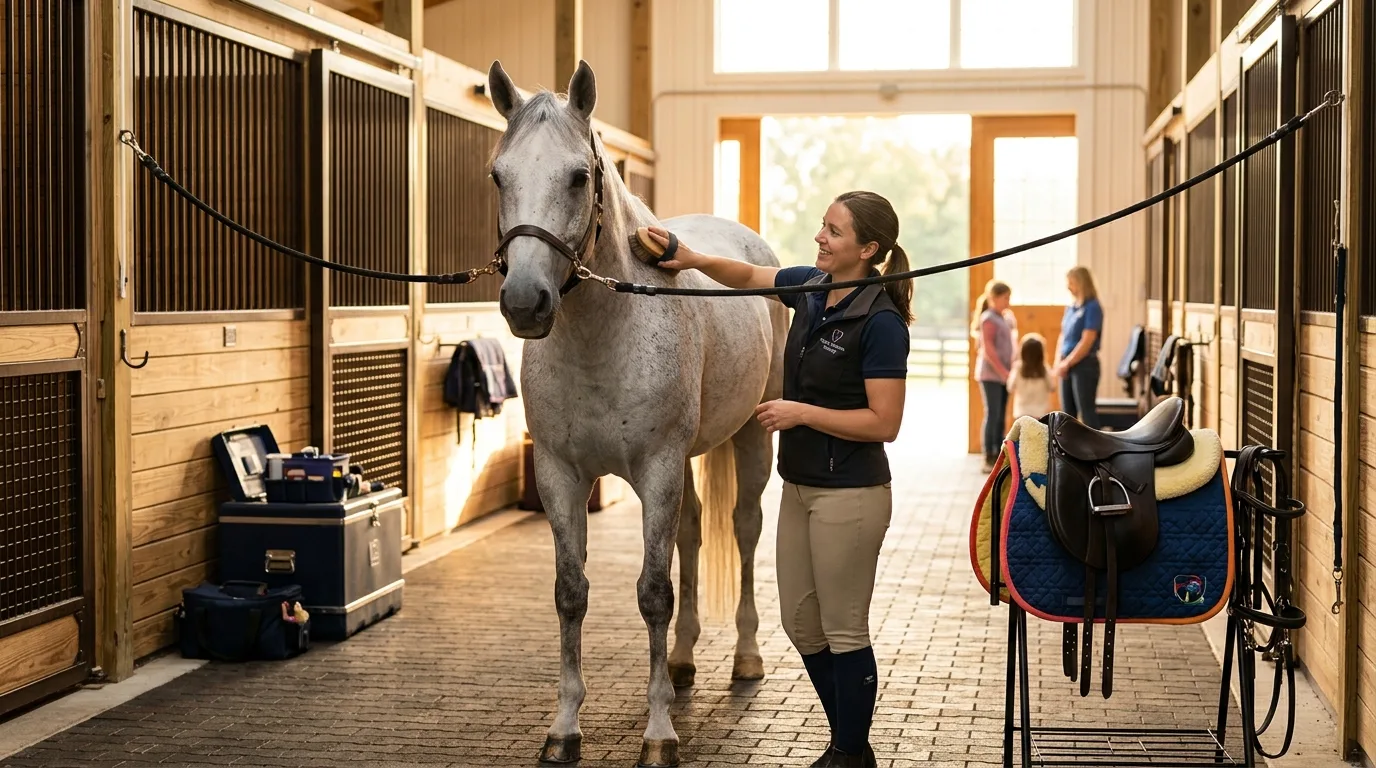
PEMF sessions work best when your horse is relaxed. A stall, cross-ties in a quiet aisle, or a sheltered area away from heavy barn traffic all work well. The Magna Wave unit produces a rhythmic clicking or thumping sound that most horses quickly ignore, but a calm environment helps the initial introduction go smoothly.
Avoid scheduling the session during feeding time or when other horses are being turned out. The less distraction, the more your horse will relax into the treatment — and relaxation is when the best therapeutic responses happen.
No need to remove shoes — but do groom
Metal shoes do not interfere with PEMF therapy. The magnetic pulses pass through metal without issue. However, it’s helpful to have your horse reasonably clean — a quick brush to remove caked mud from the back, barrel, and limbs lets the practitioner make better contact with the coil and observe muscle reactions more clearly.
If your horse is body-clipped, that’s fine too. There’s no requirement for a specific coat length.
Share your horse’s history
The more information your practitioner has, the better the session will be. Before the appointment, think about:
- Known injuries or diagnoses — Has your vet identified anything specific? Arthritis, a suspensory issue, kissing spines?
- Medications — Is your horse on any anti-inflammatories (bute, Equioxx, Previcox), joint supplements, or other medications?
- Recent changes in behaviour — Has your horse started bucking under saddle, refusing jumps, or moving differently?
- Work schedule — Is your horse in full work, light work, or on rest?
- Previous therapies — Has your horse had chiropractic, massage, acupuncture, or laser therapy before? What helped?
If you have any vet reports, radiographs, or ultrasound results, sharing those (even a photo on your phone) helps the practitioner focus treatment on the right areas.
Plan your timing
A first PEMF visit typically takes about 60-75 minutes — longer than subsequent sessions because the practitioner spends time on an initial assessment before the treatment begins.
For the rest of the day, your horse can be turned out and resume normal activity. There’s no mandatory rest period after PEMF. Some horses are a bit more relaxed or sleepy for a few hours afterward, and some are noticeably more energetic. Both responses are normal.
If your horse is in active training, it’s perfectly fine to ride the same day — many owners schedule PEMF sessions in the morning before an afternoon ride.
Hydration matters
Make sure your horse has access to fresh water before and after the session. PEMF therapy stimulates cellular metabolism and waste removal, which increases the body’s need for water. Some horses urinate more frequently in the hours after treatment — this is normal and a sign that the body is flushing metabolic byproducts.
What to expect during the session
Your practitioner will start by observing your horse’s posture, palpating key areas, and discussing their findings with you. Then the Magna Wave coil is applied — usually starting at the poll and working systematically down the neck, across the shoulders, along the back, through the hindquarters, and down each limb.
Most horses respond positively within minutes. Common signs include:
- Lowering the head
- Licking and chewing
- Deep sighing or yawning
- Shifting weight (this often indicates a sore area releasing)
- Half-closing the eyes or drooping the lower lip
Some horses flinch or react when the coil passes over an area of acute inflammation or tension. This is useful diagnostic information — it tells the practitioner exactly where the problems are. The intensity is adjusted accordingly.
After the session
Your practitioner will share what they found — areas of reactivity, tension patterns, and any concerns. They’ll recommend a follow-up schedule based on your horse’s condition.
For most horses with chronic issues, the initial recommendation is weekly sessions for 3-5 weeks, then tapering to maintenance every 2-4 weeks. Acute injuries may benefit from sessions every 3-5 days initially.
Watch your horse over the next 48 hours. Many owners notice improved movement and willingness within a day or two of the first session. For chronic conditions, full improvement typically builds over 2-3 sessions.
Ready to book?
If you’re in the Peterborough or Kawartha Lakes area, contact us to schedule your horse’s first PEMF session. We come to your barn — no trailering required.